Fourteen years of competition cooking, a KCBS judge's card, and a logbook that has run past 900 cooks have taught me one thing about barbecue gear: the piece you skip is the piece that ruins the brisket. I have watched a good rig turn out a flat, gray packer because the pellets sat in a humid garage for a month. I have watched rain run down a hopper lid that never sealed right and turn a bag of fuel into sawdust by morning. So when I sit down to write a pellet smoker gear comparison, I am not ranking the flashiest box in the catalog. I am ranking the pieces that decide whether you sleep through the night.
This comparison covers four items that belong to the same conversation: a dual-chamber pellet grill, a 20 pound bag of hardwood competition pellets, and two covers built for the Traeger Pro 22 and 575 series. They are not rivals in the usual sense. One is the rig, one is the fuel, and two are the insurance policy that keeps the rig alive through a Kansas winter. That framing is more honest than pretending a cover and a grill are the same kind of purchase, and it is more useful when you are deciding where the next hundred dollars goes.
The short answer: the recteq DualFire 1200 is the rig I would build the rest of the kit around, the Camp Chef Competition Blend is the pellet I would feed it, and the cover decision comes down to how much weather you actually park in.
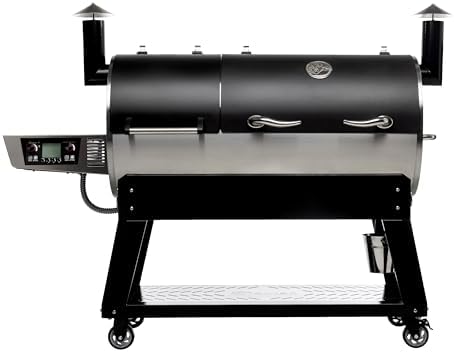
recteq DualFire 1200 Wood Pellet Smoker Grill
Two chambers let one side run hot and fast while the other holds low and slow, and recteq's temperature reputation is the best in this price class
Two firepots mean twice the ash and twice the maintenance, and the Wi-Fi app is still a convenience rather than a feature

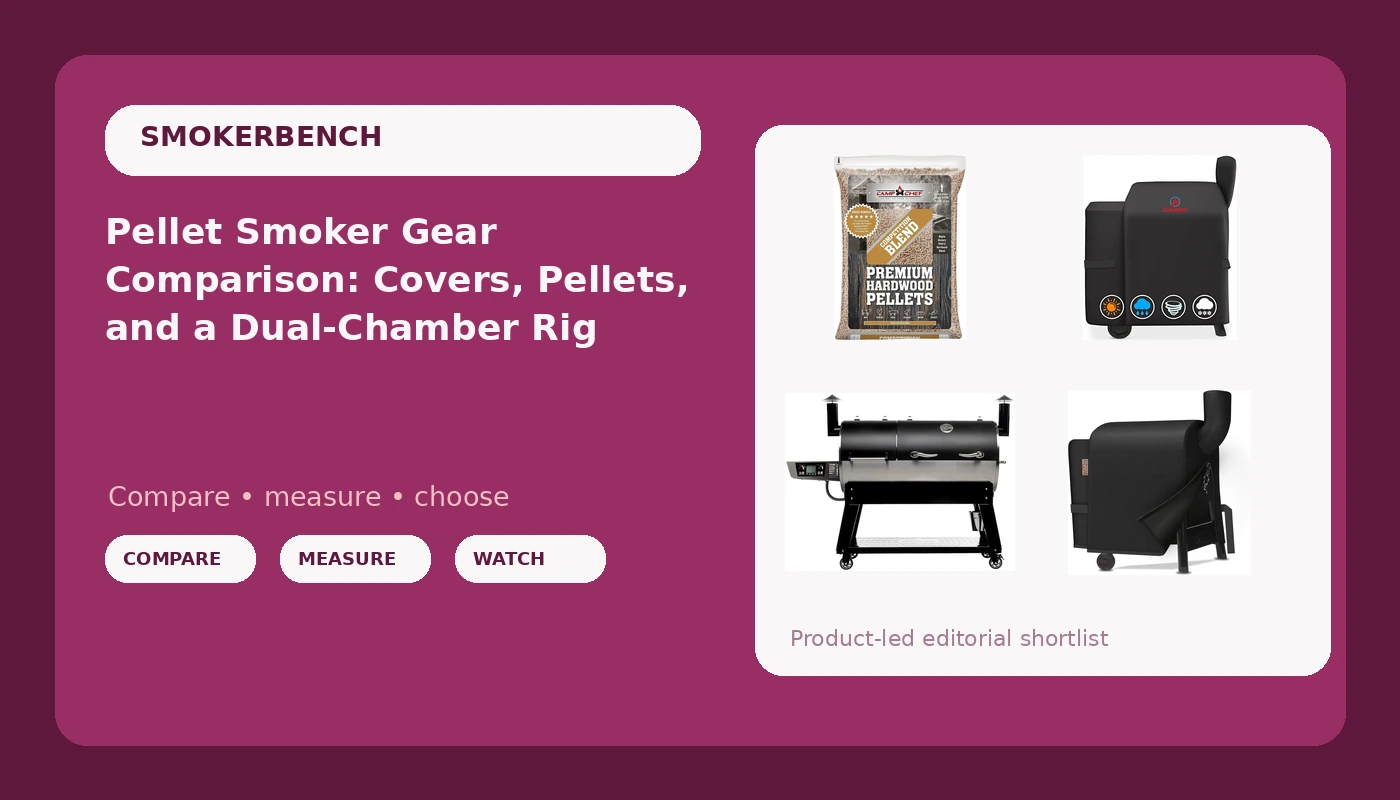
Camp Chef Competition Blend BBQ Pellets, 20 lb. Bag
A hardwood competition blend that covers smoke, bake, roast, braise, and high heat without making you think about wood species
A 20 pound bag disappears fast on overnight cooks, and pellets left in a humid garage turn into auger-clogging dust
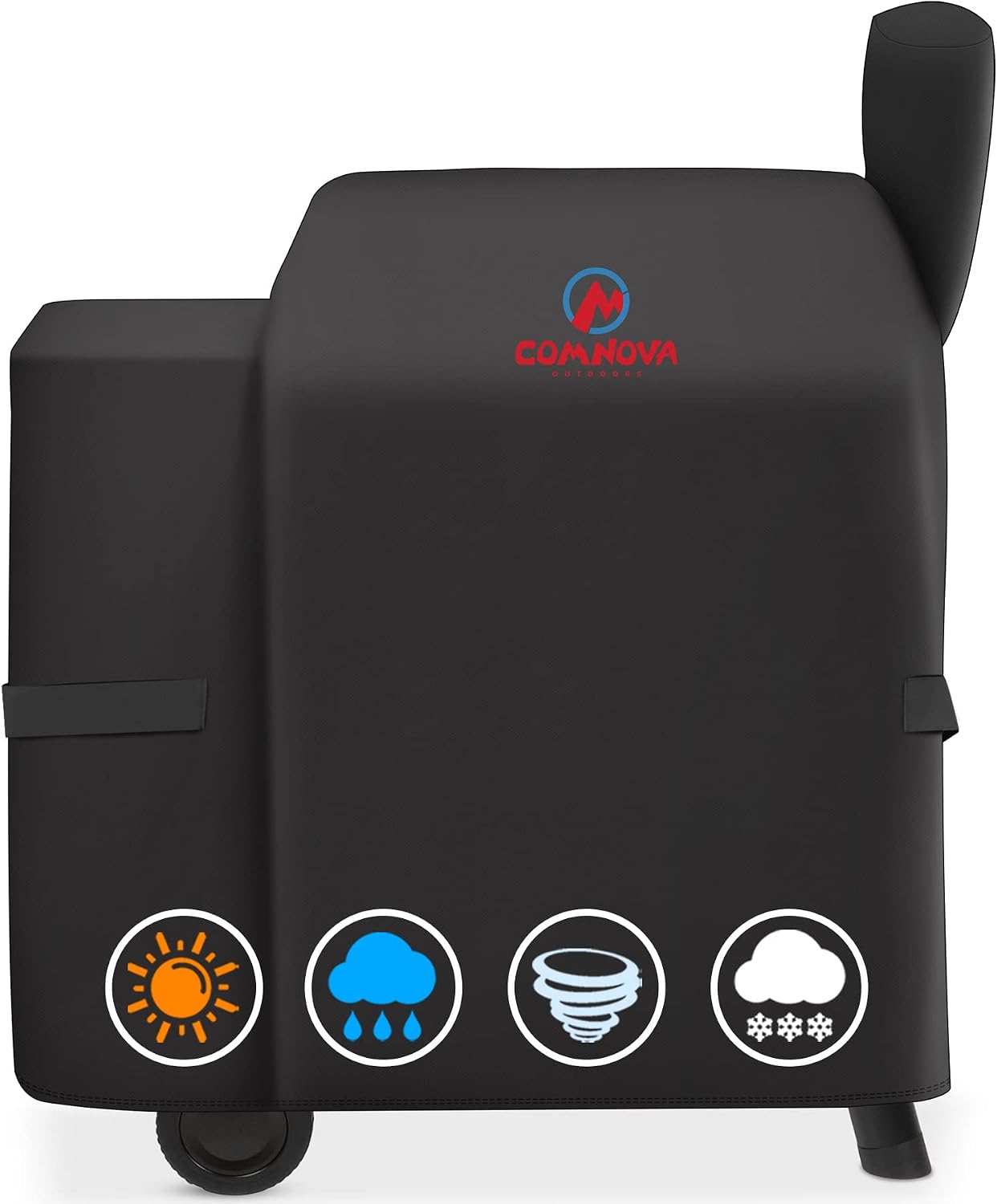
Comnova Grill Cover for Traeger Pro 22 and 575 Series, 600D
Fitted for the Pro 22, Pro 575, and Z Grills 550B, waterproof, and 600D is a real outdoor fabric weight
Thinner denier than the heavy duty option, so UV and ice are the long term question
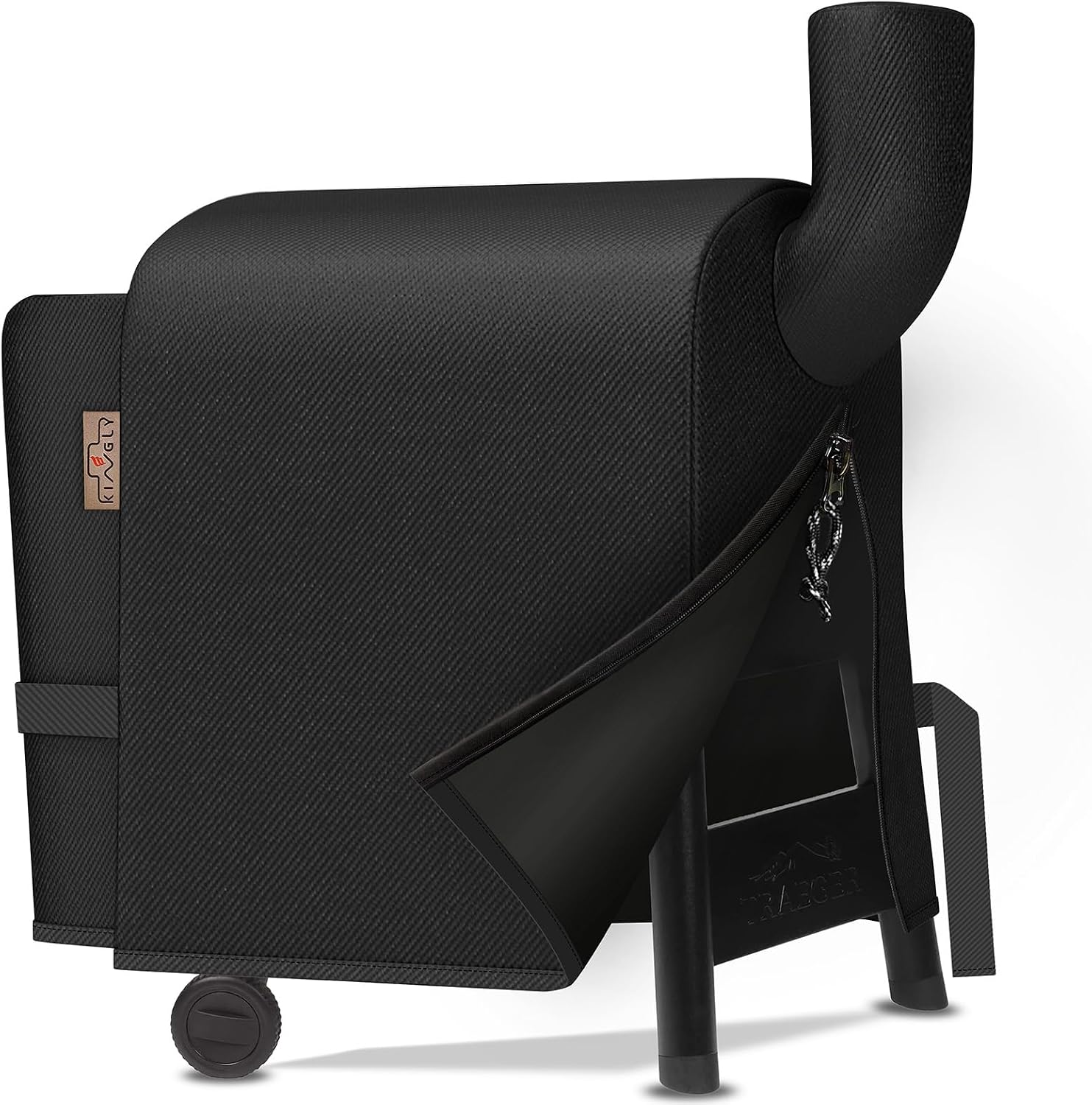
Pellet Grill Cover for Traeger Pro 22 and 575 Series, 1000D Heavy Duty Material
Heavier 1000D fabric resists UV, ice, and abrasion through a full winter
Stiffer fabric is fussier to put on, and you should verify the fitment list against your exact model
Prices and availability were captured from Amazon Creators API and may change.
How I compare gear that was never meant to compete
My rule is simple: no log, no verdict. That is easy to apply to a grill and harder to apply to a cover, so I split the criteria by what each product actually does.
For a pellet grill I want to know four things. Can I log the temperature, and does the controller hold within a range I can live with? Where is the firepot, and how thick is the steel around it, because thin steel warps and a warped firepot lies to you all night. What is the auger's reputation, because jam stories spread through this community faster than any ad campaign. And the real test, would I trust this machine with a $60 brisket at 2 AM while I sleep?
For pellets I look at the bag, not the label. Fines and dust in the bottom of the bag are what clog an auger at hour six. I want pellets that smell like wood, not like a warehouse, and I want a blend that holds together in a hopper overnight. The smoke ring is mostly cosmetic, everyone obsesses over it anyway, but the flavor is real and it comes from the wood.
For covers the criteria are fitment, fabric weight, and water management. A cover that fits loosely flaps in a 25 mph wind and scuffs the lid paint. A cover with no venting traps condensation against the steel. And a cover that does not account for the hopper lid lets water pool exactly where you do not want it.
The rig: recteq DualFire 1200
Recteq has built some of the best temperature stability in the sub-$1,200 class for years, and it is the brand I point people toward when they ask what to buy with their first real budget. The recteq DualFire 1200 Wood Pellet Smoker Grill takes that reputation and adds a second chamber, which is the part that changes how you cook.
Two chambers means two jobs at once. One side runs hot and fast, the other runs low and slow, so you can put a reverse sear on a steak while a pork shoulder rides at 225. If you have ever tried to cook a brisket and a weeknight chicken on the same grate, you know why that matters. You stop compromising one cook to protect the other.
The Wi-Fi controller is where I keep my expectations calibrated. I check my phone for the temperature graph every 20 minutes, so I am not pretending I do not care. But an app is a convenience, not a feature. What I care about is whether the graph is flat, and a graph is only worth reading if the machine holds temp in the first place. If the app drops the connection at 11 PM and the grill keeps holding, that is a good grill with a mediocre app. If the app drops and the temp drifts, that is a problem.
What I would check before committing to a dual-chamber machine: the firepot on each side, the hopper capacity for an overnight cook, and the auger's track record. Two chambers mean twice the maintenance and twice the places for ash to hide. That is the trade you are making for the flexibility.
The fuel: Camp Chef Competition Blend
Pellets are the most underrated purchase in this whole hobby. People spend a mortgage payment on a grill, then buy the cheapest fuel on the shelf, and then they wonder why the smoke tastes thin and the firepot keeps going out.
The Camp Chef Competition Blend BBQ Pellets, 20 lb. Bag is a hardwood blend built for the full range of cooking: grill, smoke, bake, roast, braise, and straight barbecue. A blend is the right call for most people because it gives you a middle-of-the-road flavor profile that works on brisket, pork, and poultry without you having to think about it. Single species pellets are fun to experiment with, and I do it constantly, but a competition blend is the everyday driver.
Two things I check on any bag. First, the bottom of the bag: if it is full of dust and broken pellets, that dust is going straight into your auger, and in a humid climate it turns into paste. Second, storage. A 20 pound bag goes faster than you think on a long cook, and half a bag left open in a garage is half a bag of future auger trouble. Keep it sealed, keep it off concrete, and buy it fresh.
The criticism I will level at any blend is honesty about what it is not. A blend will not give you the sharp, specific smoke of a single hardwood, and if you are chasing a particular profile for a competition turn-in, you will eventually want to sort that out yourself. For a backyard cook who wants consistent results without keeping a spreadsheet of wood species, this is the bag.
The covers: 600D against 1000D
This is the part of the comparison where the price gap is real but the difference is mostly about how much weather you take.
The Comnova Grill Cover for Traeger Pro 22 and 575 Series is 600D fabric, cut for the Traeger Pro 22 and 575 series, and it also lists fitment for the Z Grills 550B and similar footprints. It is waterproof and built to be left outside. 600D is a legitimate outdoor fabric weight, and for a grill that lives under a patio roof or in a garage with the door open, it is more than enough.
The Pellet Grill Cover for Traeger Pro 22 and 575 Series, 1000D Heavy Duty Material covers the same footprint in a heavier fabric. Denier is a measure of fabric weight and density, and heavier denier resists UV degradation, ice, and the kind of abrasion you get from a cover flapping against a sharp lid corner all winter. In Kansas, where we get an ice storm and then 25 mph wind the next day, I lean toward the heavier fabric.
What neither cover can fix is a design flaw underneath it. If your hopper lid does not seal, water finds the pellets no matter what is draped over the top. Check the seams on the cover, check whether there is any venting, and check the fitment list against your exact model before you buy. A cover that is two inches too loose is worse than no cover, because it holds moisture against the steel and rubs the paint off while it does it.
Which one I would buy first
If you do not own a pellet grill yet, the order is easy. Grill first, because nothing else in this list matters without a cooking chamber. Pellets second, because you cannot run a cook on an empty hopper. Cover third, and I know that sounds like I am dismissing it, but a cover is the cheapest line item here and the one most people skip until the first rust spot shows up.
If you already own a Traeger Pro 22 or a 575, the order flips. You do not need another grill. You need fuel, and you need to stop letting rain sit on the machine you already paid for. That is the whole decision, and it does not need to be more complicated than that.
The trade-offs, stated plainly
Dual chambers buy you flexibility and charge you in maintenance and counter space. A competition blend buys you consistency and charges you at the top end of flavor. A 600D cover buys you protection at a lower cost and charges you in long term UV resistance. A 1000D cover buys you durability and charges you in stiffness and, usually, in cost.
None of these are marketing problems. They are the real terms of each purchase, and the right answer depends on where you cook, how often, and what the sky does to your patio.
What I am testing next
I am working through six brands that claim a competition blend this fall, and the smoke ring results are all over the map, which is exactly the kind of thing worth writing about. I am also tracking which grills hold temp in a 25 mph Kansas wind, because that is the test that separates a controller from a thermostat. I have not run a full brisket on the DualFire 1200 yet, and I will not hand out a verdict on hold time until I have a temperature log in front of me. Until then, the specs and the fitment lists are what I have, and I would rather tell you that than pretend otherwise.