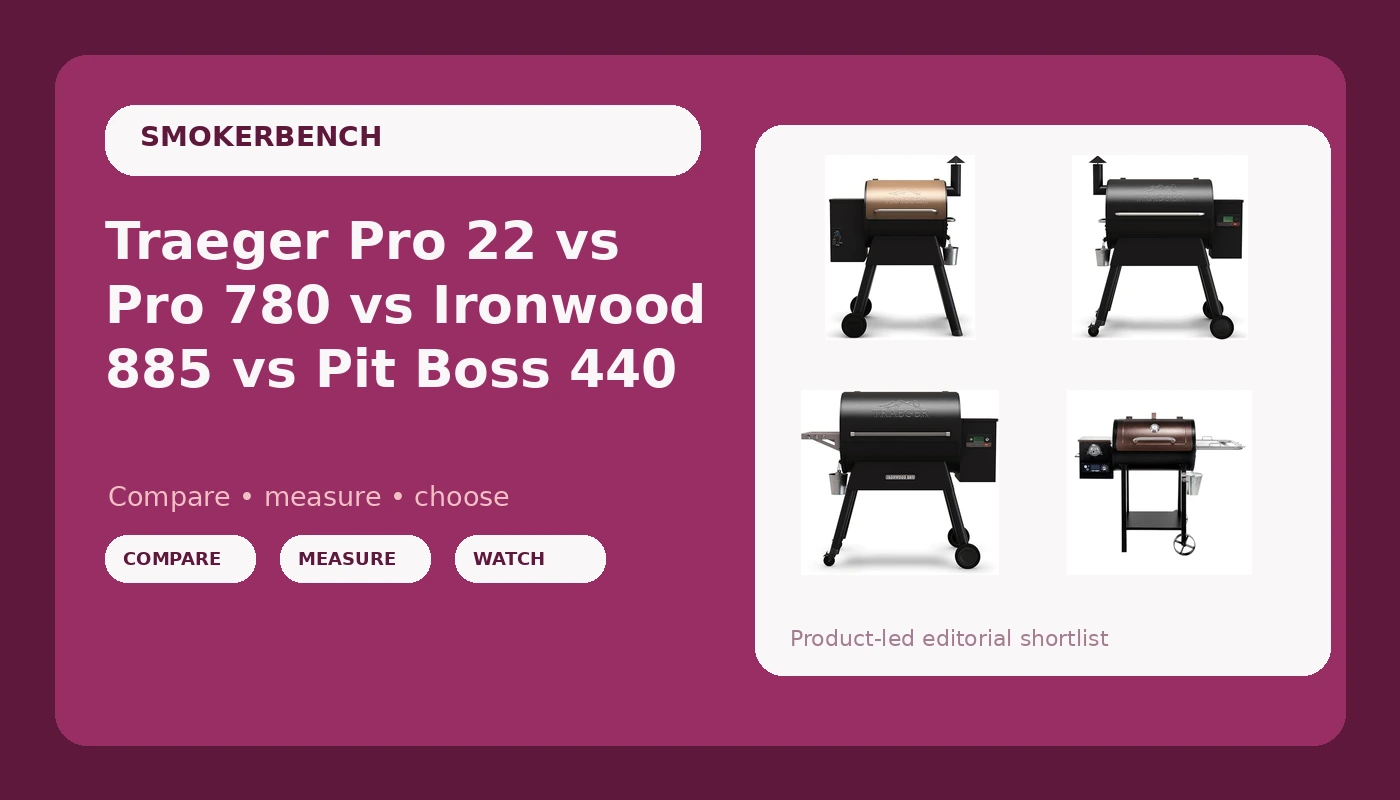
I have been judging KCBS contests for more than a decade and cooking on pellet grills longer than that, and the Traeger vs Pit Boss pellet grills argument is the one that follows me around every contest parking lot. Somebody always wants to know whether the name brand is worth the premium or whether the value brand quietly does the same job. I keep a temperature log for every cook I run, a twenty-year stack of graphs with hold times, pellet brands, and what the weather did to the smoke that day, and that logbook is the only authority I trust on this question. This comparison is the version of the conversation I would have with a neighbor over the fence, with four specific grills in front of us.
For most backyards, the Pit Boss 440 Mahogany Series is the value pick and the Traeger Ironwood 885 is the one I would trust with a sixty dollar brisket overnight. Everything between those two is a question of how much cooking space you actually need and how much you are willing to pay for the Traeger ecosystem. Here is the table, then the reasoning.
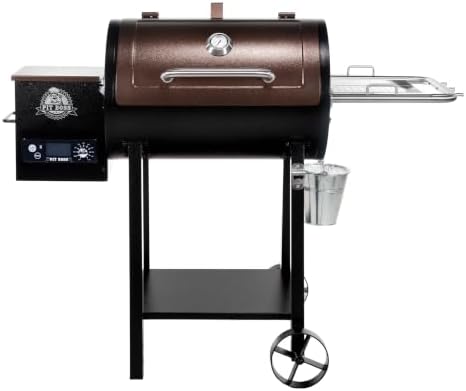
Pit Boss 440 Mahogany Series Wood Pellet Grill & Smoker, 518-Sq. In.
Widest temperature range here, 180°F to 500°F, plus a flame broiler for direct searing
A 5 lb. hopper means a refill in the middle of a long cook, and the firepot welds are the first thing I would inspect
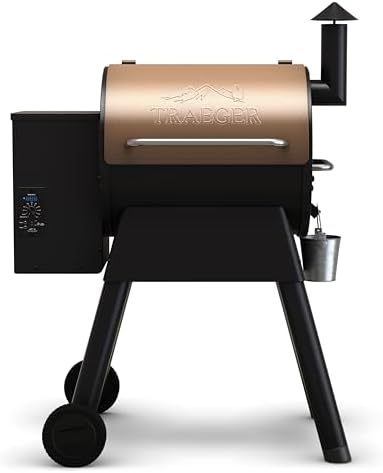
Traeger Pro 22 Wood Pellet Grill & Smoker, 572 Sq In
Listed without WiFi, so you are carrying a probe instead of checking a graph on your phone
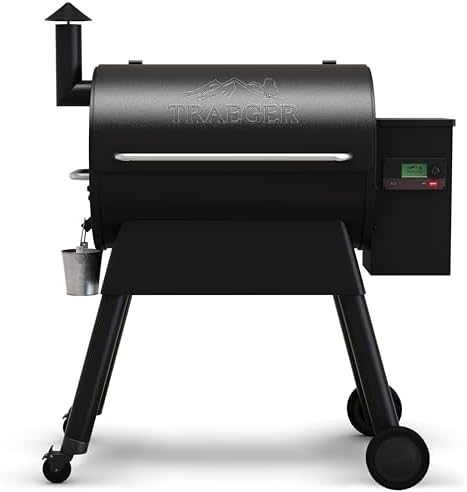
Traeger Pro 780 Wood Pellet Grill & Smoker, 780 Sq In, WiFi
You pay the Traeger premium, and the app is convenience, not temperature control
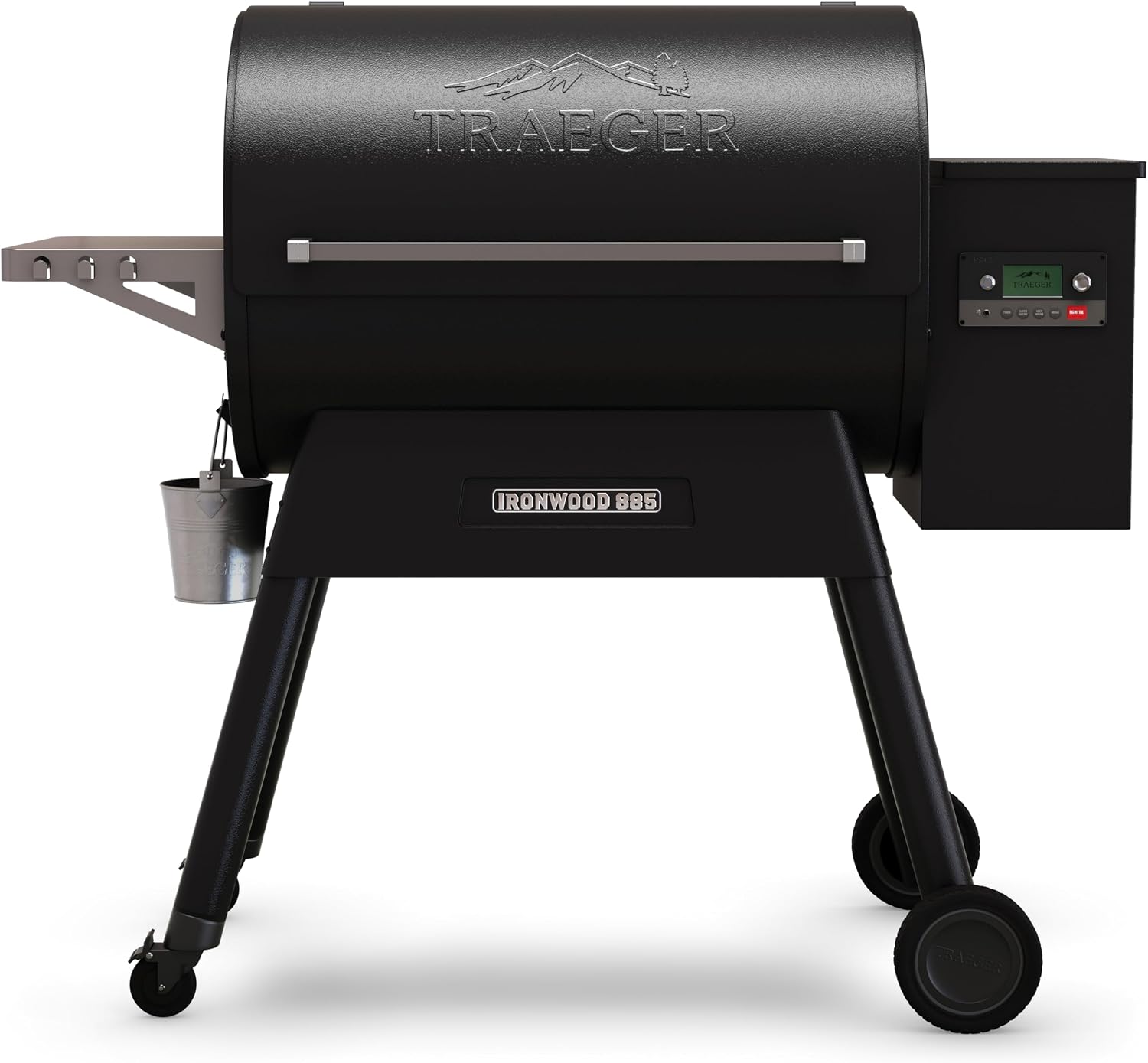
Traeger Ironwood 885 Wood Pellet Grill & Smoker, 885 Sq In, WiFi
The largest outlay of the four, and a bigger chamber burns more pellets to hold the same temperature
Prices and availability were captured from Amazon Creators API and may change.
How I judge a pellet grill
I do not start with the badge on the lid. I start with a single question: would I walk away from this thing for six hours and trust it with meat that cost more than the pellets? That test breaks down into four parts, and none of them are marketing features.
First, temperature stability. A grill that swings thirty degrees is a campfire with a hopper. I want a controller that holds within a narrow band across a long cook, and I want to be able to log it. If I cannot see the graph afterward, I cannot give you a verdict.
Second, the firepot and the steel around it. That is where value brands cut corners and where cheap units rust, warp, and start lying to the controller. When I look at a Pit Boss, the weld quality at the firepot is the first thing I put my hands on, because that is the failure point that ends a cook at hour six.
Third, the auger's reputation. Auger jams spread through this community faster than any spec sheet, and they almost always trace back to pellets turning to dust in humidity. A grill is only as reliable as the auger feeding it.
Fourth, hopper capacity and hold time. A big hopper is not a bragging right, it is a sleep schedule. If I am filling a hopper at two in the morning, the grill has already failed me in the way that matters most.
Pit Boss 440 Mahogany Series: the value pick
The Pit Boss 440 lists 518 square inches of cooking space, a temperature range of 180°F to 500°F, a flame broiler, an LED digital controller, and a 5 lb. pellet hopper. That temperature range is the number that jumps out at me, because it is wider than what I expect at this end of the market. Low and slow at 180 to 225 for a pork shoulder, then a slide of the flame broiler plate to finish steaks over direct heat, and the same machine does both jobs. That is a genuinely useful combination for somebody who wants one cooker instead of two.
The 5 lb. hopper is the honest limitation. Do the math on a fourteen hour brisket and you are refilling at some point, probably when you would rather be asleep. That is not a dealbreaker, it is a planning item: know your refill window before you light it.
The other thing I would check in person is the firepot. Pit Boss is the value king in this category, and the place value shows up is weld quality and steel thickness around the hottest part of the grill. Run your hand around it, look for clean welds, and make a judgment before the first cook rather than after the first winter.
Traeger Pro 22: the compact, no-frills Traeger
The Pro 22 lists 572 square inches, which is the smallest cooking surface of the three Traegers here and still enough for a couple of racks of ribs and a chicken at the same time. What it does not list is WiFi, and that tells you what kind of grill this is. You set the controller at the hopper, you walk away, and you carry a probe if you want to know what is happening inside.
I have a complicated relationship with WiFi apps. I make fun of them and then I check my phone for the temperature graph every twenty minutes. But I will say the thing I always say: the app is a convenience, not a feature. A grill with no app that holds temperature beats a grill with a beautiful app that drops its connection at eleven at night. The Pro 22 is the grill for the person who wants the Traeger controller and the Traeger consistency without paying for connectivity they will not use.
Where it loses is capacity and flexibility. You are not fitting two packers on 572 square inches, and on a holiday weekend with a crowd in the yard, you will feel that ceiling. For a small household that cooks two or three times a week, it is plenty.
Traeger Pro 780: the middle child with WiFi
The Pro 780 lists 780 square inches and WiFi, which makes it the size most people actually land on. That is a chamber that fits a full packer with a rack of ribs beside it, and the WiFi monitoring means you can watch a graph from the couch instead of standing in a Kansas wind.
This is the least dramatic grill in the group, and I mean that as a compliment. Nothing about it is a compromise in the way the Pro 22's lack of connectivity is, and nothing about it is oversized the way the 885 can be for a small family. If you are buying one pellet grill and you want the safe answer, this is usually the safe answer.
The cost of that safety is the Traeger premium. You are paying for the ecosystem, the controller, and the name, and I would rather you know that going in than find out later. Traeger is the Apple of pellet grills: easy, closed, and priced accordingly.
Traeger Ironwood 885: the big chamber
The Ironwood 885 lists 885 square inches and WiFi, and it is the largest surface in this comparison by a wide margin. Two packers and a couple of pork butts at once is a realistic load, which matters if you cook for a crowd or you have ever hosted a game day and wished you had started a second grill.
This is the one I would trust with an expensive overnight cook, and the reason is not a feature. It is that bigger Traeger chambers have a long track record of holding steady, and holding steady while you sleep is the entire job. Everything else on a pellet grill is garnish.
The trade-off is real, though. A bigger chamber takes more fuel to bring to temperature and more fuel to hold it there, and the Ironwood carries the highest outlay of the four. If you rarely cook more than one brisket at a time, you are paying for capacity that sits empty on most weekends.
What the spec sheet will not tell you
The listings will not tell you whether the hopper lid seals against rain. This is a pet peeve of mine and a real ownership issue. Water in the hopper turns pellets to mush, mush turns into dust, and dust is what jams an auger at hour six. If the lid sits loose, fix it or keep the grill covered.
The listings will not tell you how the app behaves when your WiFi is weak, and that matters more than any cooking feature because it is the thing that frustrates people at the worst possible moment. A dropped connection at eleven at night on an overnight cook is a specific kind of misery. Judge the grill on the graph from the controller, not on the app's uptime.
The listings will not tell you how the grill behaves in wind. I cook in a place where a twenty-five mile an hour gust is a normal Tuesday, and wind is what exposes a controller that is only barely holding on. If you cook in open ground, this is the test that matters most and the one nobody puts on the box.
And the listings will not tell you steel thickness. Thin steel warps and lies. It warps around the firepot, then the temperature readings drift, then you are chasing a set point that the grill cannot reach anymore. That is a two-year problem you cannot see on day one.
The trade-offs, stated plainly
If you want the most cooking capability per dollar, the Pit Boss 440 wins and it is not close. You get the widest temperature range, a flame broiler, and a digital controller, and you accept a 5 lb. hopper and a firepot you should inspect with your own eyes.
If you want the lowest-friction ownership experience and a compact footprint, the Traeger Pro 22 is the buy. You give up WiFi and you give up capacity, and you get the Traeger controller.
If you want the balanced answer that most people should probably take, the Traeger Pro 780 sits right in the middle with 780 square inches and WiFi.
If capacity is the priority and you cook overnight for crowds, the Traeger Ironwood 885 is the one, and you pay for that capacity in fuel and in up-front money.
What I am testing next
I am partway through a run of six pellet blends all claiming to be a competition blend, and the smoke ring differences are larger than the marketing suggests, which is a story for another day. I am also watching how the newest controllers handle a twenty-five mile an hour Kansas wind, because that is the condition that separates a grill that holds temperature from a grill that just reports one.
Whatever you buy, log your first three cooks. Same pellets, same set point, same weather if you can manage it. If the numbers hold, you bought a smoker. If they swing, you bought a campfire with a hopper, and you will know before you waste a brisket finding out.