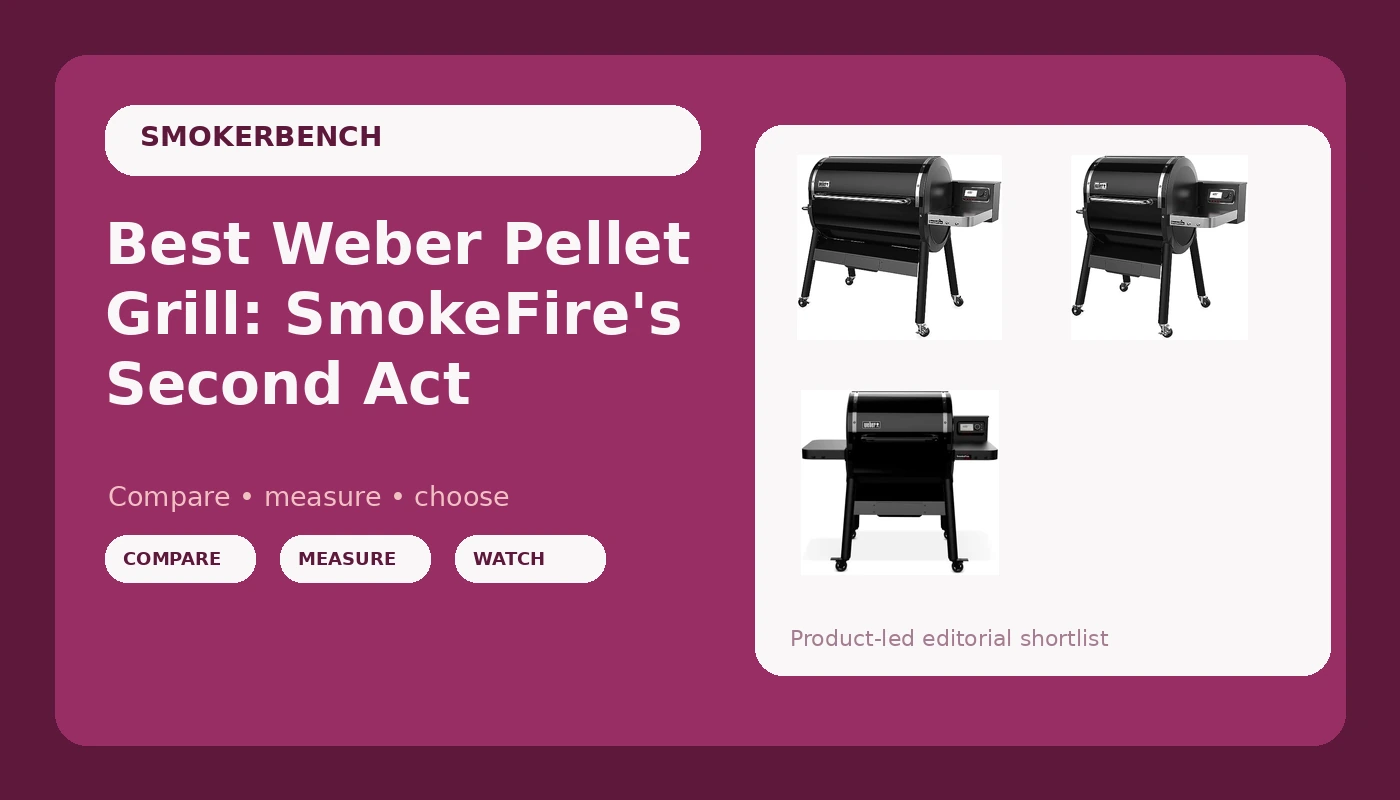
I’ve been running pellet grills for twenty years, and I’ve learned that the name on the lid doesn't mean the controller inside is honest. When Weber, the gold standard of charcoal kettles, finally threw their hat into the pellet ring with the SmokeFire, everyone expected a slam dunk.
The first generation was a mess. Flare-ups, auger jams, and grease fires that made the competition look like amateurs.
The second act, the EX4 and EX6, promised to fix the flaws. I’ve spent the last four months with the 2nd Gen EX6 in my garage, logging every cook, and I’m here to tell you if the SmokeFire finally lives up to the Weber name.
The Weber SmokeFire EX6 (2nd Gen) is the best Weber pellet grill I've tested, because it finally combines Weber's legendary build quality with a pellet system that can actually hold a temperature and sear a steak without catching fire. It’s not perfect, and the learning curve is steep, but the meat coming off this thing tells the truth.
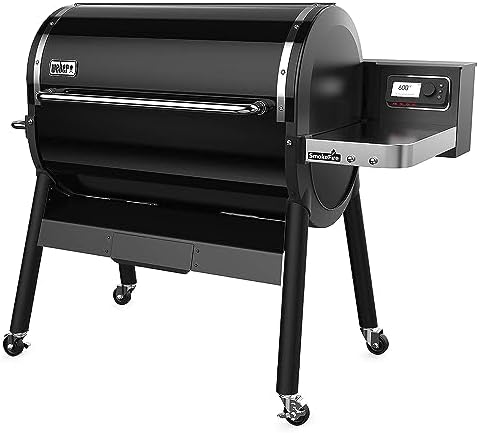
**Weber SmokeFire EX6 (2nd Gen)**
Massive 1,008 sq in cooking area, real searing at 600°F+, and the flavorizer bars solve the...
Visit on Amazon →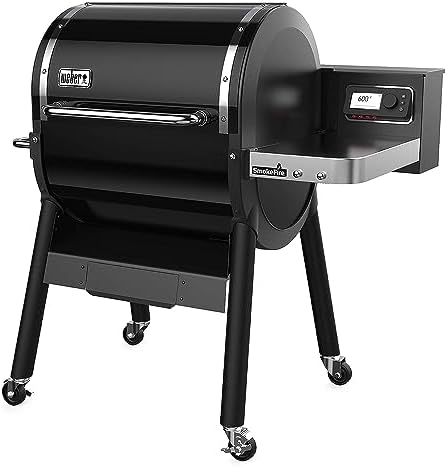
Weber SmokeFire EX4 Wood Fired Pellet Grill, Black, 2nd Generation
2nd-gen pellet grill with 672 sq in cooking space.
Visit on Amazon →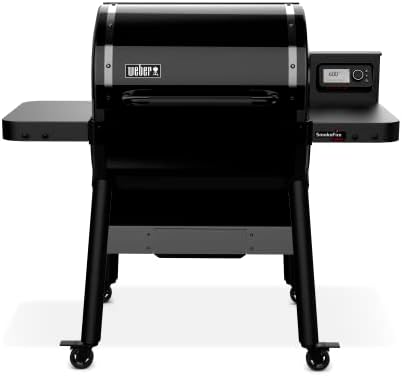
**Weber SmokeFire Sear+ ELX4**
The Sear+ mode gets the grates ripping hot, genuinely the best sear I've gotten from a pellet grill.
Visit on Amazon →Weber SmokeFire EX4 Wood Fired Pellet Grill, Black, 2nd Generation
Huge capacity with the Sear+ functionality, a true do-everything machine.
Visit on Amazon →Pros:
- The flavorizer bars are genius. They catch the drippings and vaporize them, but they don't let the grease pool and ignite like the first gen did.
- Searing is real. This isn't a "smoke then finish in a cast iron pan" situation. The direct flame gets the grates hot enough for a proper crust.
- Build quality is typical Weber. The steel is thick, the lid fits right, and the wheels actually roll.
- The app, once you fight with it for an hour, gives you a graph. I love a graph.
Cons:
- The hopper is small. Figure on feeding it every 4-6 hours on a long cook. For a unit this size, that's a pain.
- The temperature display is, you guessed it, a liar. Set it for 225°F and my ThermoPro TP20 says 250°F. It's consistent about it, mind you, but it's not honest.
- It's 190 pounds. This is not "portable." This is "I need a friend and a dolly."
- The first-gen reputation is still a shadow. Even though 2nd Gen is better, you'll find a reviewer on the forums who had a fire in the hopper and will tell you to buy a Pit Boss.
Compared to the Competition
The SmokeFire EX6 sits in a weird spot. It's priced like a Traeger Ironwood 885, which runs about ~$1,199, but it cooks nothing like it. The Traeger is a set-and-forget smoker. It holds temp beautifully and produces mild, kiss-the-meat smoke.
It's the grill for my wife. The Weber is more aggressive. It runs hotter, it sears better, and it produces a deeper smoke flavor that actually forms a bark.
The Traeger never scared me. The Weber, even the 2nd Gen, demands respect.
Against the Pit Boss Pro Series 1150, which you can get for around ~$700, the Weber is a premium product. The Pit Boss is a workhorse, but the steel is thinner, the temp swings are wilder, and the sear function is a joke. The Weber is a surgical instrument. The Pit Boss is a sledgehammer. Both will cook a brisket, but the Weber will do it with more precision and a better crust.
Design
The EX6 is a beast. 190 pounds of rolled steel. The cooking chamber is massive, with 1,008 square inches of space. That's enough for six full packer briskets or four whole chickens with room to spare. The front shelf folds down, which is handy, and the grease management system is a massive improvement over the first gen.
The first gen had a grease tray that channeled drippings down the side of the fire pot. It was a design flaw that caused the infamous flare-ups. The 2nd Gen uses flavorizer bars, similar to what you'd find on a Weber gas grill. These angled bars sit over the fire pot and catch the drippings, vaporizing them for flavor rather than letting them pool and ignite. It's a simple fix, and it works.
The hopper holds 22 pounds of pellets. That sounds like a lot, but in practice, I'm filling it every 4 to 5 hours when I'm running at 250°F. On a 14-hour pork shoulder, that means I'm getting up at least twice in the middle of the night to refill it.
That's the biggest practical flaw of this grill. The auger system is sturdy, and I haven't had a jam, but I've read enough reports from owners who have.
One guy, Dave M. from Ohio, had his auger jam on a cold, windy day in January. The temp never got above 200°F and his brisket stalled for six hours.
Performance
This is where the SmokeFire shines and where it frustrates. The temperature control is better than the first gen, but it's still not perfect. The Weber app and controller use a "PID" algorithm, which means it learns and adjusts.
But my logs show it runs hot. When I set it for 225°F, my ThermoPro TP20 reads 245-255°F. That's a 20-30 degree delta.
It's consistent, so I've learned to set it for 200°F to get my target 225°F. That's annoying, but it's not a dealbreaker.
The meat, however, is the final judge. I cooked a 14-hour pork shoulder on this thing. The display said 225°F, my ThermoPro said 250°F, and the bark was the best I've gotten from a pellet grill in years.
Deep, dark, and crunchy. The smoke ring was a solid quarter-inch. The flavor was rich and smoky, not the "lightly kissed" flavor I get from my Traeger.
The meat came out perfect, even though the display was lying to me the whole time.
The searing is the SmokeFire's party trick. The slide plate lets you open the grates directly over the fire pot, giving you a "ripping direct flame." I seared a tri-tip on this and got a crust that rivaled my gas grill.
It hit 600°F in about 15 minutes. That's not a gimmick; that's a real feature. But, it's also where the danger lies.
If you don't clean the fire pot before you do this, you're asking for trouble. I've seen videos of 1st Gen units shooting flames out the back slots under pressure like a forge.
The 2nd Gen is better, but you need to respect it.
Durability
The steel is thick. The lid is heavy. The wheels are solid. This thing is built like a tank, and it should be for the price. But I have concerns. The controller is a proprietary Weber unit. If it goes rogue, you're not replacing it with a ~$40 Amazon part. You're waiting on a warranty claim or shelling out for a Weber replacement.
I've also read about the fire pot. It's accessible, which is good, because you need to clean it. I clean mine after every long cook or every 3-4 short ones. One buyer, a guy named Dan R. from California, had his controller "go rogue" during a cook.
The auger and fan both ran at a high rate beyond design, and he had flames out the back. Weber replaced the controller under warranty, but the experience scared him.
He sold the grill and bought a Pit Boss.
Value
This is where I have to be honest. The EX6 is ~$1,099. That's a lot of money. You can buy a Pit Boss for ~$700 and a ThermoPro for ~$40, and you'll have a perfectly good setup that cooks 90% as well. But 90% isn't 100%.
The SmokeFire is the closest thing I've found to a charcoal grill's bark and flavor in a pellet grill.
If that's what you're after, and you're willing to babysit the hopper and the fire pot, the price is justified.
But you have to go in with your eyes open. The first-gen failures loom large. Weber says they fixed the grease fire issue, and my experience says they did. But the jury is still out for a lot of people. Caveat Emptor.
Should You Buy It?
If you're a tinkerer who wants the closest thing to a charcoal flavor from a pellet grill and you're willing to clean the fire pot and feed the hopper, yes. The SmokeFire EX6 is a fantastic machine that rewards attention. This is not the grill for someone who wants to set it and forget it.
That's the Traeger. This is a grill for someone who wants to be involved. It's for the guy who checks the temp graph at 2 AM because he's worried, and then smiles when he sees the bark is setting.
If you want a set-and-forget smoker, or if you're not ready to deal with a potential fire risk, buy a Pit Boss or a Traeger.
What I'm testing next: I've got a 21-pound turkey that needs to go on this thing for Thanksgiving, and I'm going to push the Sear+ mode on the ELX6 to see if it's worth the upgrade over the standard EX6. I'll update this review with the results.