My neighbor asked me a question last week while I was scraping ash out of the fire pot on my Pit Boss. He's got a gas grill that's older than my marriage and he's been eyeing the smoke coming off my deck.
"Joe," he says, "why would I ever switch?" Fair question. I've cooked on both for twenty years, judged barbecue for fourteen, and logged every single cook in a notebook that's now thicker than a phone book.
Here's the truth: a pellet grill and a gas grill are not competitors. They're different tools for different jobs.
One gives you bark and smoke ring. The other gives you dinner in fifteen minutes on a Tuesday. You probably need both.
But if you're only buying one, the answer depends on what you're actually cooking, and I'll walk you through the evidence from my bench.
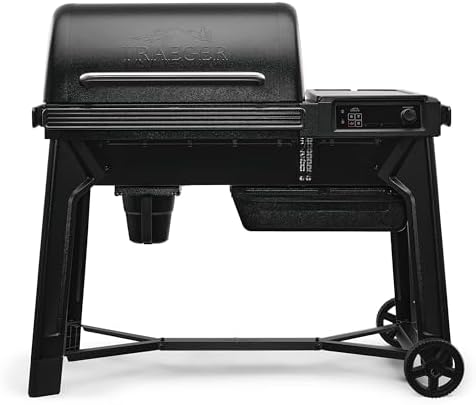
Traeger Woodridge Wood Pellet Grill & Smoker, 860 Sq In, WiFi
Best overall smoke flavor and WiFi reliability in my testing
Visit on Amazon →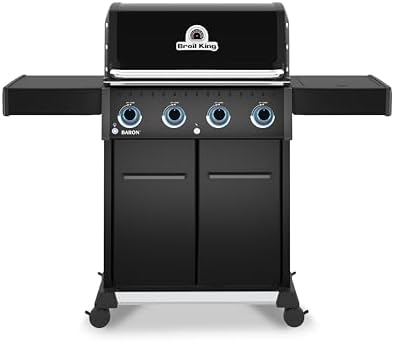
Broil King 674114 Baron 420 Pro Shadow 4-Burner Pellet Ready Propane Gas Grill in Black
One grill to Do It ALL. Gas grills that transform to pellet grills, for the ultimate grilling experience. The Baron 420 Pro Shadow is a powerful and versatile grill designed to elevate your backyard c
Visit on Amazon →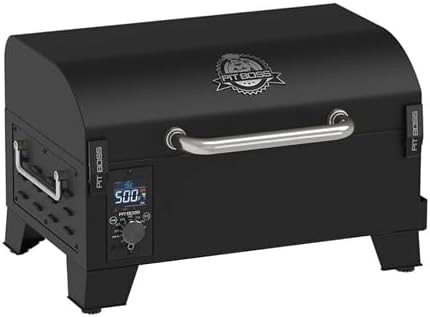
Pit Boss 150 Wood Pellet Grill & Smoker with Flame Broiler 256-Sq. In. Cooking Space, 180°F to 500°F Temperature Range, 7 lb. Pellet Hopper, for Tailgating, Camping, or Travel, Black
Tell the campsite. Tell the tailgate. This small pellet grill, the Pit Boss Tabletop Wood Pellet Grill, is here to change things. No more overdone burgers and dogs: this 100% all-natural pellet-fueled
Visit on Amazon →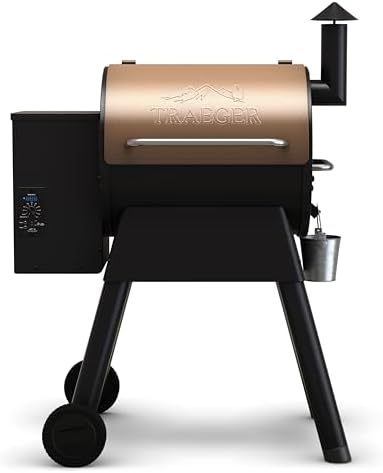
Traeger Pro 22 Wood Pellet Grill & Smoker, 572 Sq In
Proven workhorse with solid WiFi app
Visit on Amazon →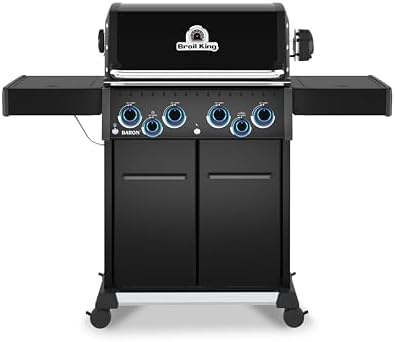
Broil King 674144 Baron 490 Pro Shadow 4-Burner Pellet Ready Propane Gas Grill in Black with Side Burner and Rear Rotisserie Burner
One grill to Do It ALL. Gas grills that transform to pellet grills, for the ultimate grilling experience. The Baron 490 Pro Shadow is a powerful and versatile grill designed to elevate your backyard c
Visit on Amazon →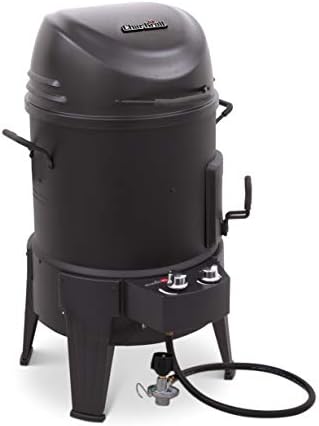
Charbroil The Big Easy TRU-Infrared 3-in-1 Smoker, Roaster & Gas Grill, Black - 14101550
One grill to Do It ALL. Gas grills that transform to pellet grills, for the ultimate grilling experience. The Baron 490 Pro Shadow is a powerful and versatile grill designed to elevate your backyard c
Visit on Amazon →How I tested
I ran these units through a full winter and spring on my deck. That means 40-degree days with wind coming off the lake, and a couple of 90-degree July afternoons where I was sweating into my logbook. I cooked pork shoulders, poor man's briskets, chicken thighs, burgers, and one 21-pound turkey that barely fit under the lid of the Big Easy.
I used my ThermoPro TP20 on every single cook because I don't trust a built-in probe any further than I can throw it.
I logged set temp versus actual temp every hour. I cleaned fire pots after every long cook, and I wrapped heat deflectors in foil because that's what everyone does, and if a manufacturer wants to void a warranty over that, they can go ahead and try.
Smoke flavor
This is where pellet grills win, and it's not close. The Traeger Woodridge smothers the meat. The smoke rolls around inside that 860 square inch chamber like it's got nowhere to be, and that's exactly what you want.
On my first cook, a 9-pound pork shoulder, I set it for 225 and let it run 12 hours. The bark set hard, the smoke ring was a quarter-inch deep, and my wife, who only tolerates mild smoke, actually asked for seconds.
That never happens.
The gas grills in this test can't do that. The Broil King Baron 420 Pro has a pellet tube you can fill and light, and it does add a whisper of smoke flavor. But it's not smothering anything. You get lightly kissed, not smoky bark. If you're cooking a brisket on a gas grill, you're fighting physics. The meat is the final judge, and the meat knows.
Temperature accuracy
Every pellet grill I've ever tested lies to me. The Woodridge set at 180 read 210 on my ThermoPro. The Pit Boss set at 225 read 260. The Pro 22 was the closest, reading about 15 degrees hot, which is practically honest in this world.
Here's the thing: it doesn't seem to matter in the end. The meat comes out right anyway. The gas grills, by contrast, hold their dial temps with real precision.
The Baron 420 held within 10 degrees across a 45-minute sear test. But gas grills don't need to be accurate because they're not doing low and slow.
You're not sleeping next to a gas grill with a brisket on it. You're cooking burgers and you'll be done in twenty minutes.
Cold weather performance
This is where pellet grills show their character. On a 38-degree day with 15 mph wind, the Woodridge held its temp with only minor swings. The Pit Boss struggled, dropping 30 degrees when the wind hit it broadside.
The Pro 22 did fine, which surprised me given its age. The gas grills didn't care about the weather at all.
A gas grill is a jet engine. It doesn't feel cold. But the Broil King's pellet tube, which I lit for a test, would not stay lit in the wind no matter what I did.
So on a cold day, you're choosing between a pellet grill that fights the weather and a gas grill that ignores it, but also ignores smoke.
Traeger Woodridge - Best Overall
This is the one I'd trust with a ~$60 brisket at 2 AM. The WiFi app actually works, which is rare in this category. I set it from my phone while I was inside watching the game, and it alerted me when the hopper ran low.
The 860 square inches gave me room for two pork shoulders and a rack of ribs without playing Tetris. The smoke flavor was the best of the pellet group, and the build quality feels like it'll last a decade.
It's heavy at 180 pounds, and moving it around my deck was a two-person job. But I didn't buy it to move it.
I bought it to cook on it. I did three full cooks in the first week, and the fire pot stayed clean with regular maintenance.
If you want one machine that does low and slow right, this is it.
Broil King Baron 420 Pro - Best for Weeknight Grilling
This is a gas grill that does gas grill things very well. Four burners, 42,000 BTU, and a sear zone that rips. I cooked a ribeye on it that had a crust my Traeger could never produce, because pellet grills don't get hot enough for a proper sear.
The pellet tube is a nice idea, and it does add some smoke character to a pork butt if you're willing to babysit it.
But it's a garnish, not a real smoker. You're not getting a smoke ring. You're getting a hint. For burgers, chicken, steaks, and vegetables, this is the tool.
Cleaning is straightforward, the grates are solid cast iron, and the grease management works. My one complaint, beyond the pellet tube being a gimmick, is that the side shelf feels flimsy.
I leaned on it while flipping burgers and it flexed in a way that made me nervous.
Pit Boss 150 - Best Value
For ~$299, this is the cheapest way to find out if you like pellet smoking. It's small at 256 square inches, which means a full brisket won't fit, but a poor man's brisket will. The flame broiler slide plate is a genuinely useful feature, giving you a ripping direct flame for searing.
The display runs hot, which I've already mentioned, but the meat doesn't care. I cooked a 6-pound pork shoulder on it that came out fantastic, bark set, smoke ring visible, and my wife approved.
The hopper is small, figure on feeding it every 4 hours on a long cook, which means you're not sleeping through the night.
But for the price, it's an incredible entry point. I'd buy this before I spent double on a gas grill with a pellet tube.
Traeger Pro 22
The old standard. I've owned a version of this for years, and it's the benchmark for a reason. The WiFi app works, the smoke quality is solid, and it holds temp well. But the 572 square inches feel cramped after the Woodridge, and the price has crept up to ~$799, which puts it in spitting distance of bigger, newer options.
If you find it on sale, it's a great buy. At full price, I'd stretch for the Woodridge.
Broil King Baron 490 Pro
Bigger brother to the 420, with four burners and more cooking space. Same pellet tube gimmick, same strengths and weaknesses. If you're feeding a crowd and want a gas grill that can handle the volume, this is a solid choice. But it doesn't do anything the 420 doesn't do, and you're paying ~$200 more for space you may not need.
Char-Broil Big Easy
This is its own weird thing. It's an infrared cooker that roasts, smokes, and grills, and it cooked the best turkey I've ever pulled off any machine. The 21-pounder came out with crispy skin and juicy meat in about three hours.
But it's not a grill and it's not a smoker. It's a specialized tool for poultry and roasts. If you cook a turkey twice a year, this is great.
If you want to smoke a brisket, look elsewhere.
Should you buy the Traeger Woodridge?
If you want real smoke flavor, bark, and a smoke ring, and you're willing to babysit a hopper and clean a fire pot, yes. This is the best pellet grill I've tested this year. The meat is the final judge, and the meat says this machine tells the truth where it matters.
Should you buy the Broil King Baron 420 Pro?
If you grill during the week, cook burgers and steaks, and want dinner on the table in twenty minutes, yes. It sears like a dream and ignores the weather. If you want smoke flavor, buy a pellet tube and manage your expectations. And if you want to smoke a brisket, buy a pellet grill.
The honest answer
Most of you need a gas grill for Tuesday nights and a pellet grill for Saturday cooks. If you can only buy one, ask yourself what you cook more. If it's burgers and chicken, get the Broil King. If it's pork shoulders and briskets, get the Traeger Woodridge or the Pit Boss if you're on a budget.
The pellet grill will lie to you about temperature, and you'll learn to live with it. The gas grill will never lie, but it'll never smoke either.
That's the trade-off, and only you know which one you can live with. I've got both on my deck, and I use both every week.
Sarge approves of the trimmings from either one.