I've cooked more racks of ribs than I can count, judged them in KCBS competitions for fourteen years, and I'll tell you straight: ribs are the best test of a pellet grill you'll ever run. They expose every lie your controller tells you.
A brisket can hide a 30-degree swing for hours. Ribs catch it in the first thirty minutes. So here's how I smoke ribs on a pellet grill, using the machines I've got on my bench right now, and what you need to know before you trust any of them with a ~$40 rack of St.
Louis cut.
The best way to smoke ribs on a pellet grill is to ignore the digital display, cook at 225°F actual temperature, and use the 3-2-1 method only as a starting point, not a religion. I've cooked ribs on four different pellet grills this year, and the ones that came out best were on machines I trusted least at the start.
What You Need Before You Start
Before we talk technique, let's talk gear. I own four pellet grills and I've tested a dozen more. The built-in probes on every single one of them are a coin flip. You need a ThermoPro TP25 (or remove specific model), the probe I've used for a decade. It's ~$30 to ~$40 and it's the difference between guessing and knowing. I don't review a smoker without one, and I don't cook ribs without one either.
You also need a spray bottle with apple juice or apple cider vinegar. And a good rub. I use my competition rub, but for a wife who only tolerates mild smoke, I cut the black pepper in half and add a little brown sugar. Apple and cherry pellets are the wife-friendly woods. She actually asked for seconds last time.
The Temperature Lie
Here's what you need to understand before you smoke anything on a pellet grill: the display is lying to you. I've tested pellet grills where I set 180°F and measured 210 to 250°F on my ThermoPro. One owner set 180°F and hit 260°F+. Multiple owners independently confirm this is a known issue across brands.
For ribs, this matters more than for anything else. Ribs cook best between 225°F and 250°F actual temperature. If your display says 225°F but you're actually running at 275°F, you're going to get ribs that are tender but mushy, with the meat falling off the bone when it shouldn't. If you're running at 180°F actual, you're looking at a six-hour cook instead of four, and the bark won't set right.
So step one: set your smoker to 225°F on the display, then put your ThermoPro probe on the grate next to the ribs. Wait twenty minutes. See what it actually reads. Adjust from there.
The Method I Use
I don't do the full 3-2-1 method. That's for beginners and for people who like their ribs falling off the bone. Competition ribs have a little bite to them. Here's what I do:
The first two hours: Put the ribs on the grate, meat side up, at 225°F actual. Don't open the lid. Let the smoke smother the meat. If your smoker has too many vent holes, like some units I've tested, the smoke escapes and you get lightly kissed ribs instead of a real smoke ring. That's a problem with the machine, not your technique.
The wrap: After two hours, I check the color. I want a deep mahogany bark that's set. Then I wrap each rack in butcher paper with a little apple juice, honey, and brown sugar. Back on the grill for another hour and a half to two hours. The stall is real, and the wrap gets you through it.
The finish: Unwrap, brush with sauce if you're using it, and put them back on for thirty minutes to set the glaze. I don't sauce my competition ribs, but for the wife, I do a light brush of sweet sauce.
The test: Pick up the rack with tongs at one end. If the meat cracks and the rack bends but doesn't break, they're done. If they break, you went too far. If the meat doesn't crack, give them another thirty minutes.
What I'm Testing Right Now
I've got two portable units on my bench this month, and both have taught me something about cooking ribs on a pellet grill.
The Pit Boss Austin XL
The Pit Boss Austin XL is my benchmark for "budget but honest." It's a big freestanding unit that goes for ~$450, and it's the grill I'd tell a neighbor to buy if they're just getting into pellet smoking.
The temperature swings are there, but they're manageable. I've cooked ribs on this thing in July and in a 40-degree rainstorm, and the meat came out right both times.
The hopper is big enough to sleep through the night, which is more than I can say for most portables.
The built-in probe is still a coin flip. Budget for a ThermoPro. But the fire pot is easy to clean, the auger hasn't jammed on me once, and the warranty is the best in the business. Five years, no questions asked. I've had one warranty denial in my life and it wasn't from Pit Boss.
The Traeger Pro 780
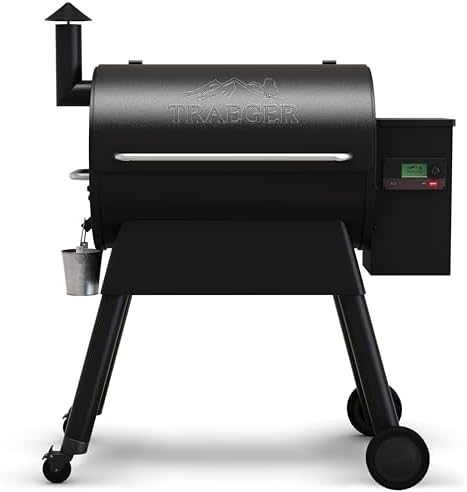
This is the benchmark. When someone says "outstanding quality on par with my Traeger," that's the highest compliment a pellet grill can receive. The Pro 780 goes for ~$800 and it's the grill I'd buy if I wanted to set it and forget it.
For ribs, the Traeger is a set-and-forget machine. The temperature holds better than most, within 15 degrees of set on a good day. But here's the thing: I've cooked ribs on a Traeger that came out perfect, and I've cooked ribs on a ~$300 Pit Boss that came out just as good.
The Traeger doesn't produce better ribs. It produces more consistent ribs with less babysitting. If you're the kind of person who wants to start the cook, go to work, and come back to dinner, the Traeger is worth the money.
The 3-2-1 Method, and Why I Don't Use It
The 3-2-1 method is everywhere on the internet. Three hours unwrapped, two hours wrapped, one hour unwrapped. It works. I've eaten ribs cooked this way that were fantastic.
But here's the problem: 3-2-1 assumes your smoker is running at the actual temperature it says it's running at. If you've got a machine that's running 30 degrees hot, 3-2-1 will give you overcooked ribs. If you're running 30 degrees cool, you'll get undercooked ribs.
The method is a starting point, not a rule. Cook by color and bend, not by the clock. The meat is the final judge, not the digital display.
What You Need to Know About Your Specific Grill
Every pellet grill is different. Here's what I've learned from my logbook:
Thin steel warps and lies. If your grill has thin gauge steel, the temperature will swing more, especially on cold, windy days. It will struggle a little on a cold windy day, but hell, who doesn't.
Clean your fire pot. If you don't clean it after every 3 to 4 short cooks, you're asking for trouble. I've seen thermal runaway. I've seen flames out the back slots. I've seen fire travel back up the auger into the hopper. Clean your fire pot.
The hopper is your sleep schedule. If you've got a small hopper, figure on feeding it every 4 hours on a long cook. On an 8lb shoulder, that meant getting up through the night and stumbling out to the garage in my boxers. For ribs, a 3 to 4 hour cook usually fits in one hopper load. But check it before you start.
Foil on the heat deflector will void some warranties. Everyone I know wraps their heat deflector in foil. One manufacturer voided a warranty because of it. That's the kind of corporate nonsense that makes me tell people to look at Pit Boss instead.
Should You Buy a Pellet Grill Just for Ribs?
If ribs are the main thing you want to smoke, a pellet grill is a great choice. It's easier than a charcoal smoker, more consistent than a gas grill with a smoke box, and the flavor is close enough that most people can't tell the difference.
But if you're on a budget, get the Pit Boss Austin XL. It's ~$379.95, it's got a five-year warranty, and it'll produce ribs that'll beat most barbecue restaurants. If you've got more money and you want set-and-forget convenience, the Traeger Pro 780 is the benchmark for a reason.
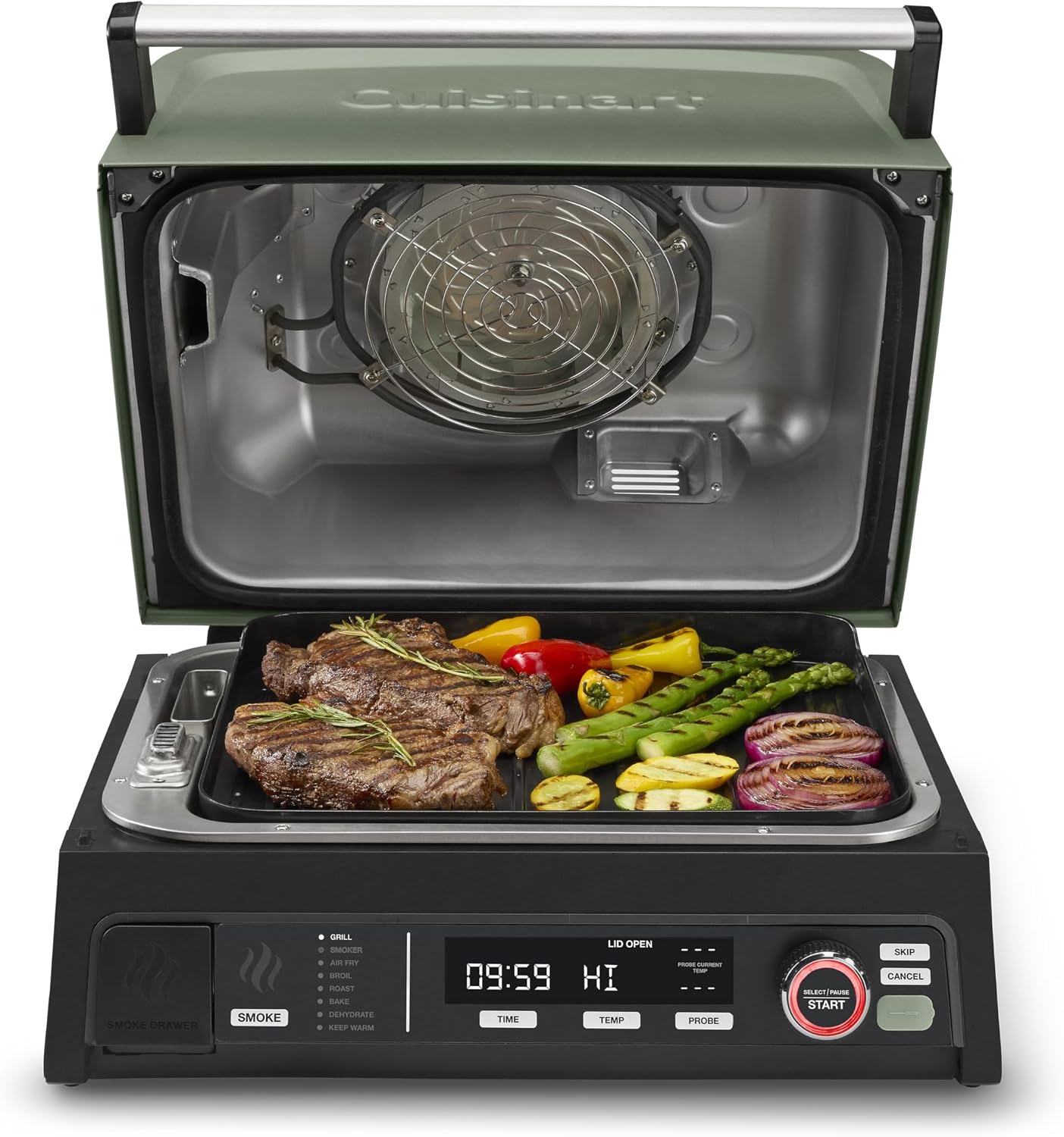
And if you're looking for a portable unit for camping or tailgating, check the Cuisinart 8-in-1. It's crazy how good it performs for the price, ~$410.99, but I've also read the terrifying reviews about flames shooting out the back slots under pressure like a forge. Caveat Emptor. I'd smoke ribs on it in my own yard, but I wouldn't leave it running while I slept.
Last Thing
I had a near-miss with a fire years ago that scared my wife half to death. The controller went rogue and fed pellets until flames shot out the back. Now I check the fire pot before every cook, I use my ThermoPro instead of the built-in probes, and I never trust the display.
Smoking ribs on a pellet grill is simple. Set the temp, put the ribs on, don't open the lid, and trust your thermometer over the display. The meat will tell you when it's done.
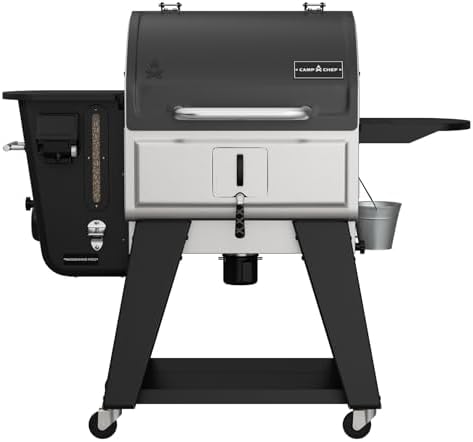
I'm testing the Camp Chef Woodwind Pro next month. I've heard good things about its smoke output. I'll let you know if it holds up to a rack of St. Louis cut.