Related: Best Pellet Grill for a Full Packer Brisket
I have kept a temperature log for every cook for 14 years. Hold time, ambient swings, pellet brand, wind speed, what the weather did to the smoke. In all that time, one number has decided more briskets than any rub or sauce: how still the grill sits overnight. Pellet grill temperature stability is the entire game. A grill that swings 30 degrees is a campfire with a hopper bolted to it, and no app on earth fixes a firepot that will not hold.
So this is not a features list. It is the checklist I run before I trust a cooker with a packer at 2 AM. Four things are on the bench: two full-size pellet grills, one small-space grill with smart features, and the manual I keep handing to beginners. I will tell you what each one is for, and where I would want to see a temperature graph before I committed.
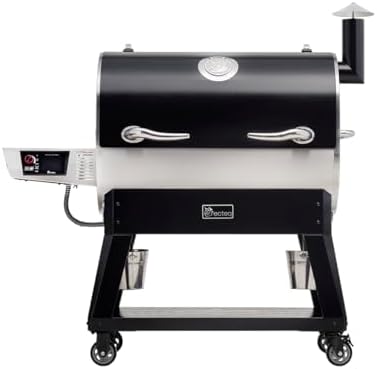
Best All-Around: recteq Flagship 1600
This is the one I would build a season around. A 1667 square inch cook chamber is not a spec you brag about, it is a spec that lets you run a full packer on the lower grate and still have room for a couple of racks of spares and a foil pan of beans. Crowding a chamber is the fastest way to wreck a cook, because the meat closest to the firepot runs hot and the meat on the far edge stalls.
The 40 pound hopper is the number that matters most to me. Hopper capacity is a camping spec to most people. To me it is the difference between sleeping and not sleeping. A 40 pound hopper means you load it before bed and you are still loaded at sunrise, which is the only version of an overnight brisket that ends with you rested and the meat rested.
recteq has built its reputation on temperature stability, and that reputation is the reason this grill sits at the top of the list. The WiFi is there, and I will use it, but understand what it is for. It is for a graph. If the app shows me a flat line at 225 through the stall, I do not care what the interface looks like. If it loses the connection at 11 PM, I care a great deal, because then I am walking outside in a coat to read a dial.
What I would check before trusting it: firepot steel thickness and auger reputation. Thin steel warps, warped steel lies to you, and an auger that jams at hour six turns a brisket into a story you tell for years.
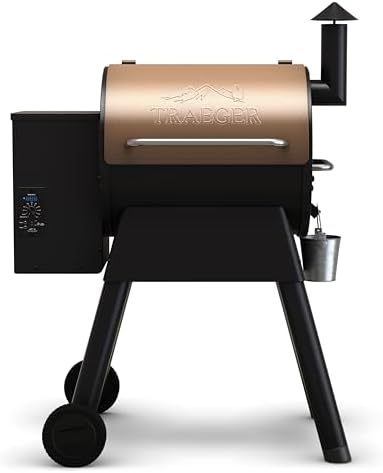
Best Entry Point: Traeger Pro 22
Traeger is the Apple of pellet grills. Easy, closed ecosystem, and you pay for the name. I say that as a compliment and as a warning, because both halves are true. What you get with the Pro 22 is a 572 square inch chamber and the most documented pellet grill on the planet. Every pellet blend, every rub, every brisket method has been run on a Traeger by somebody who posted the results.
That documentation is worth real money to a beginner. When you are learning, you want the cook that a thousand other people already did, so you can compare notes instead of guessing.
The 572 square inch chamber is honest about what it is. Two racks of ribs, a spatchcocked chicken, a pork butt, or one trimmed brisket. It is not a chamber you load for a party and forget. If you are feeding eight people pulled pork, you will be cooking in shifts or adding a second grate. Know that going in and you will be happy.
The other thing I would tell a first-timer: the Pro 22 is a closed ecosystem, so buy your pellets from someone who actually sells wood and not just a label. Smoke flavor comes from pellet quality and cook method, not from the size of the firepot.
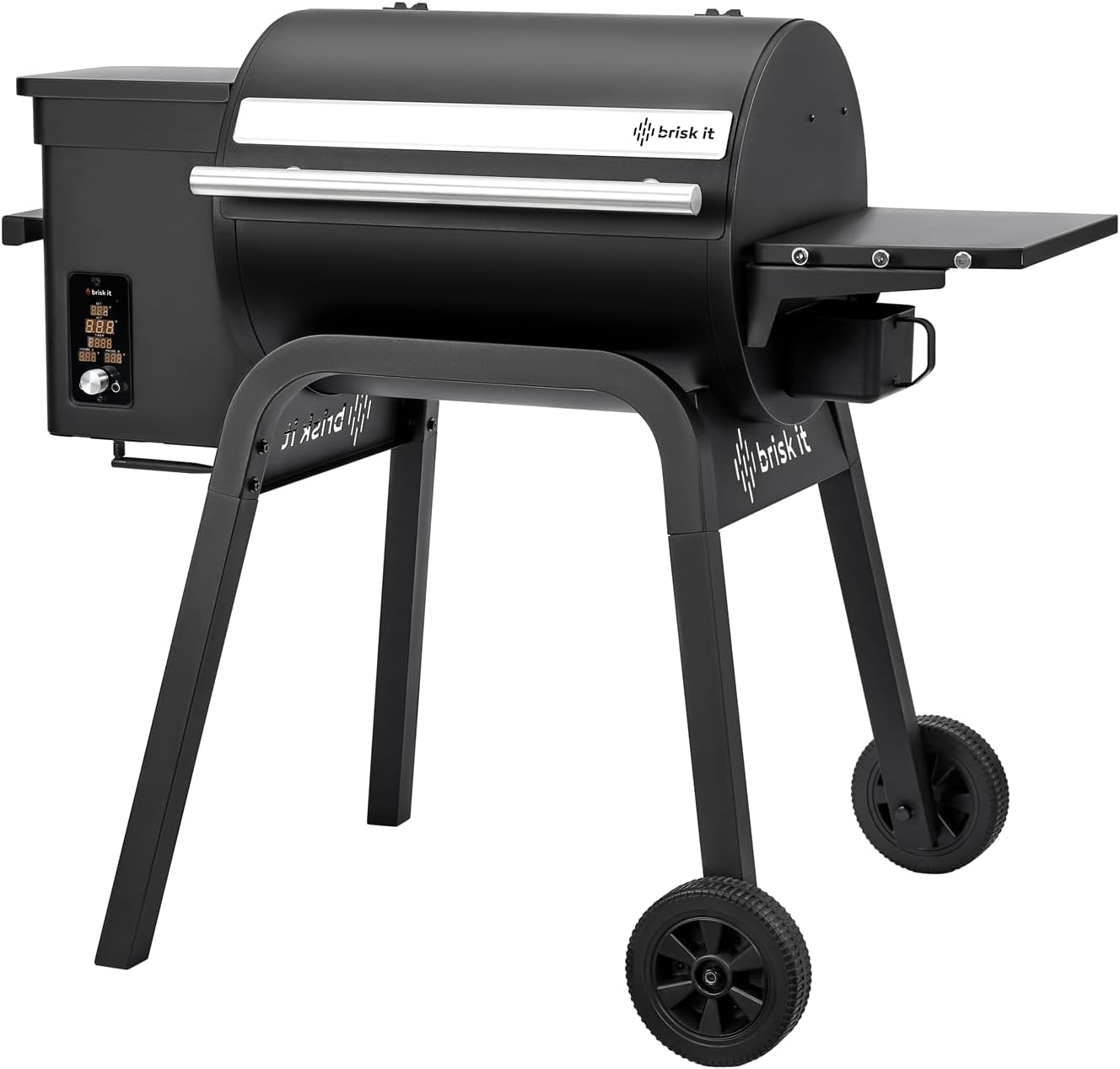
Best Small-Space Pick: Brisk It Zelos-450
A 450 square inch grill with WiFi and A.I. built in is aimed at a specific cook: the person on a balcony, a small patio, or a city lot who wants real smoke without giving up half the yard. I have cooked on enough small chambers to know the tradeoff. You get heat recovery that is quick because there is less steel to heat, and you get less room to move meat away from the hot end.
The A.I. part I approach the way I approach every smart feature. Show me the temperature log. If the grill uses its sensors to hold a tighter band through the stall, that is a real feature and I will say so. If it is a recipe suggestion engine wearing a lab coat, it is garnish. Either way, the cook is what I judge, not the phone.
Where this grill earns its place is the small-cooker category. Two racks of baby backs, a chicken, a weeknight tri-tip. If that is your life, a 1667 square inch chamber is a waste of patio and a waste of pellets, because you are heating a lot of empty steel.
The Manual Worth Keeping: The Traeger Grill Bible
I hand beginners a book before I hand them a thermometer, because a thermometer tells you where you are and a method tells you where you are going. This one is a step-by-step guide built around brisket, ribs, and the rest of the pellet grill canon, and it is written for the person who just unboxed a cooker and does not yet know what a stall is.
Read the brisket chapter twice. Wrap at 165 when the bark is set, and do not argue about it. The value of a book like this is that it gives you a sequence to follow, so when something goes sideways you have a baseline to compare against instead of a panic.
It is a companion, not a replacement, for the grill. Buy it with your first cooker, not your fourth.
How I judge a pellet grill
Four questions, in order, every time.
Can I log the temperature? No log, no verdict. I want to see the graph from a real overnight cook, not a marketing claim about a range.
Where is the firepot, and how thick is the steel? Thin steel warps, and a warped firepot runs hot on one side and cold on the other. That is not a tuning problem, that is a design problem.
What is the auger's reputation? Jam stories spread fast in this community for a reason. Cheap pellets turn to dust in humidity, and a dust-choked auger quits at hour six, which is exactly when you cannot fix it.
Would I trust it with a packer at 2 AM? That is the only test that counts. Everything else is garnish.
Pellet grill reference table
This is the table I keep in my head when somebody asks me what to buy. Cook space tells you what fits. The hopper tells you whether you sleep. The last column tells you who the grill is actually for.
| Grill | Cook space | Hopper | Who it is for |
|---|---|---|---|
 Visit on Amazon → Visit on Amazon →recteq Flagship 1600 |
1667 sq in | 40 lb | Full packers, overnight cooks, a crowd |
 Visit on Amazon → Visit on Amazon →Traeger Pro 22 |
572 sq in | Not stated in the listing | Ribs, chicken, a first pellet grill |
 Visit on Amazon → Visit on Amazon →Brisk It Zelos-450 |
450 sq in | Not stated in the listing | Balconies, small patios, smart-grill curious |
 Visit on Amazon → Visit on Amazon →The Traeger Grill Bible |
Not a grill | Not a grill | Beginners who want a method |
The pattern in that table is simple. Big chamber plus big hopper equals overnight cooks. Small chamber equals weeknight cooks. And a book equals a cook who stops guessing three weekends in.
Should you buy the recteq Flagship 1600?
Yes, if you cook for a crowd or you cook overnight. The 1667 square inch chamber and the 40 pound hopper solve the two problems that ruin more cooks than bad technique: crowding and refilling. Add recteq's reputation for holding temp and you have a grill I would hand a packer to without a second thought.
The honest caveat is footprint and fuel. A chamber that size takes up patio, and it burns pellets to heat space you may not need. If you cook two racks of ribs on a Tuesday, this is more grill than the job.
Should you buy the Traeger Pro 22?
Yes, if this is your first pellet grill. The 572 square inch chamber is enough for ribs, chicken, pork butt, or one trimmed brisket, and the ecosystem around Traeger means every method you read about has already been run on a grill like yours. That is a real advantage while you are learning.
Just go in knowing the limits. This is not a party cooker, and it is not an overnight packer machine unless you like getting up. Buy it to learn on, and buy good pellets.
Should you buy the Brisk It Zelos-450?
Yes, if space is your constraint and you want smoke without a trailer. A 450 square inch chamber on a balcony is a sensible machine, and the WiFi and A.I. features are worth watching if they tighten the temperature band. Judge it on the cook, not the app.
Whatever you pick, log the temperature. Show me the graph and I will tell you whether you bought a smoker or a campfire with a hopper.