Pellet grill temperature stability is the entire game. A grill that swings 30 degrees is a campfire with a hopper bolted to the side, and no rub, no spritz, and no wrap technique rescues a brisket that spent eight hours in a 75-degree window. I have cooked on four pellet grills out of a Kansas City backyard, and I have watched a 25 mph north wind turn a perfectly good cooker into a guessing game.
Here is the part nobody tells a beginner. The grill is only half of the equation. The other half is what you do before the meat goes on and what you do after it comes off. Damp pellets, a firepot packed with last month's ash, and a grease-caked drip tray will wreck a hold on a grill that costs as much as a used truck.
This is the routine I run, in order, from unloading the hopper to scraping the firepot. It works on any pellet smoker with a digital controller, and it costs you nothing but a thermometer, a shop vac, and about 20 minutes of setup.
Why you should trust me
I have been cooking competition BBQ for 14 years and I am a KCBS certified judge. I keep a temperature graph for every single cook: hold time, pellet brand, ambient temp, wind direction, what the weather did to the smoke. That logbook is 20 years old and it is the only reason I have an opinion worth reading.
I own four pellet grills and I have cooked more briskets than I can count. I do not own a stick burner anymore, and I am not going to pretend a pellet grill is the same craft. It is not. But the temperature stability question is a pellet grill question, and it is the one I get asked most, usually at 11 PM by a neighbor standing over a grill that just dropped 40 degrees.
No pellet brand endorsements here. I buy my own pellets, I say which ones failed, and I will tell you when the problem is the cook and not the cooker.
How I picked and how I tested
I am not going to claim I ran a full packer on every grill in this article. That is the kind of thing people write and nobody checks. What I can tell you is the protocol I run on any grill before it earns a spot on my deck, and the criteria behind the two pieces of gear below.
Four questions, in order. Can I log the temperature independently, or am I trusting a dial? Where is the firepot and how thick is the steel around it? Thin steel warps and lies to you about what the controller is doing. What is the auger's reputation, because jam stories spread fast in this community and they are usually true. And the last one: would I trust it with a $60 brisket at 2 AM?
Everything below is either the cooker I would hand a first-timer or the bottle I keep next to it. The rest is method, and method is free.
The two things I would buy before the first cook
You can learn every technique in this article and still fight your grill if the hardware is wrong. One of these is the rig. The other is the reason the rig keeps holding temp three months from now.
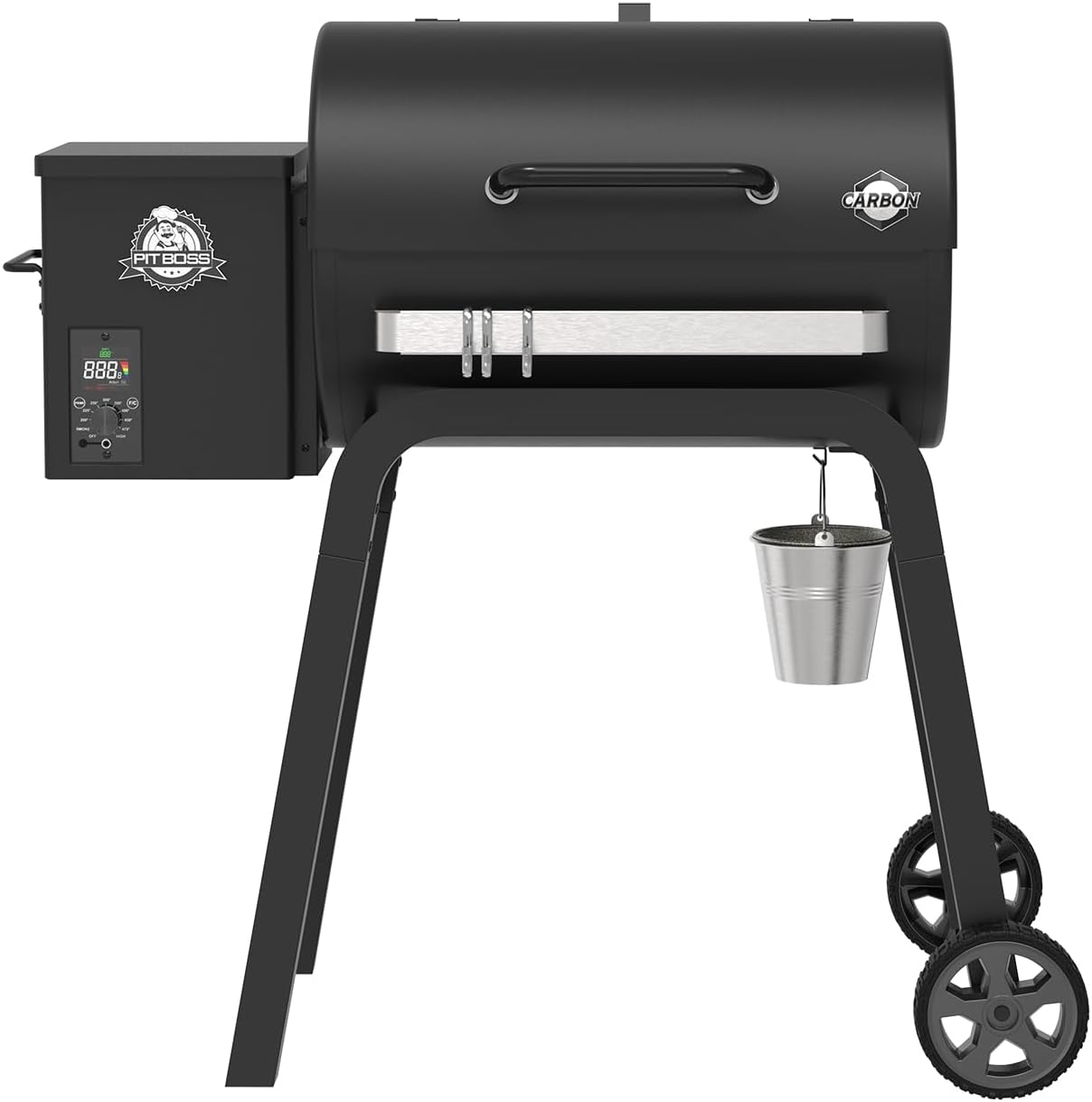
Our pick: Pit Boss 700 Carbon Series Wood Pellet Grill & Smoker with LCD Digital Controller, 718-Sq. in. Cooking Space, 180°F to 500°F Temperature Range, Meat Probe, 13.5 lb. Pellet Hopper, Black
 Visit on Amazon →
Pit Boss is the value king in this category and this is the model I point beginners toward. You get 718 square inches of cooking space, which is enough for a packer plus a couple of racks of ribs, and a temperature range of 180°F to 500°F, which means you can smoke a pork shoulder low and then open it up to sear. The LCD digital controller and the included meat probe cover the two things a new owner needs on day one: a setpoint you can read from the deck and a probe in the meat.
Where I tell people to slow down is the 13.5 lb hopper. That is a fine hopper for a six-hour rib cook. It is not an overnight hopper at 225 in a cold wind, and if you are planning a 14-hour brisket you should plan on a refill before you go to sleep and probably one more when you wake up. Hopper capacity is a camping spec. It is not a hold-time spec.
The other thing to inspect when it lands is the firepot. I have said for years that Pit Boss is where you check the weld quality, and this is still the spot. Look at the welds around the firepot before you ever light it. If something looks sloppy, that is the area that rusts, warps, and starts lying to you about temperature two seasons in.
Flaws but not dealbreakers: The hopper lid and the 13.5 lb capacity mean long cooks require attention, and the meat probe is a convenience, not a replacement for a grate-level thermometer. Bring your own probe for the cooking surface.
This is the right first pellet grill for someone who wants real smoking space without spending like a competition team, and it is the grill I would hand to a neighbor who has never owned a pellet cooker.
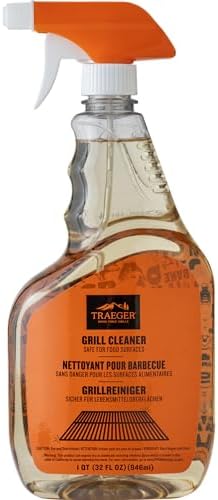
The upkeep pick: Traeger Grills BAC679 Grill Cleaner Spray Bottle,Grease Cutter,Keep Grill Shiny,No Harmful Chemicals,Citrus Scent,946ml,(Pack of 2)
 Visit on Amazon →
This one is not glamorous and it is the reason the section above works. Temperature stability is a maintenance habit as much as a hardware spec. A drip tray with a quarter inch of baked-on grease and a firepot full of ash change how the grill runs, and not in your favor. This is a grease cutter in a spray bottle with a citrus scent, sold as a two pack of 946ml bottles, and it is what I keep on the shelf for grates, the drip tray, and the outside of the barrel.
Read the label for surfaces and dwell time before you spray anything. The pattern I use is scrape first, spray second, wipe third. A spray bottle is not a magic eraser for carbon that has been curing on a drip tray since Memorial Day.
Flaws but not dealbreakers: It is a surface cleaner, not an ash vacuum. You still have to empty the firepot by hand or with a shop vac, and no spray bottle removes a pellet dust clog in the auger. Buy it for the grates and the grease, and keep a scraper and a vac next to it.
Anyone who has ever pulled a cold, greasy drip tray out of a grill at midnight will appreciate having two bottles of this in the garage.
The actual workflow: how to hold temp on a pellet grill
Now the part you came for. This works on any pellet grill with a digital controller, and it works better on the Pit Boss above than on most of what I have cooked on.
Step one: Pick your spot. Level ground, and give the grill room to breathe. Do not jam it against a fence or under a deck rail. Wind is the number one enemy of a hold, and a grill boxed in on three sides will run hot on one end and cold on the other. If you cook in a windy part of the country, set up a wind break, and never block the exhaust.
Step two: Start with dry pellets, not dusty ones. Open the hopper and look. If the pellets are shiny and snap when you break one, you are fine. If the bag is half dust and the pellets crumble in your fingers, you are about to fight an auger jam at hour six. Sift the dust out of the bag with a cheap colander before it goes in the hopper.
Step three: Fill the hopper and know your hold time. Fill it all the way. On a 13.5 lb hopper, at smoking temps, plan a refill window on anything past six hours. Fill before you go to bed, not when the app tells you the grill is out of fuel.
Step four: Run the startup cycle with the lid open. Every pellet grill has a startup sequence where the auger feeds the firepot and the igniter lights it. Leave the lid open during that phase, let the fire establish, and then close it. Closing the lid early traps smoke and unburned fuel, and that is where flame-outs come from.
Step five: Let it settle before the meat goes on. Set your temp, close the lid, and walk away for 20 to 30 minutes. The controller overshoots on startup. The steel has to heat through. The first honest reading is the one you get after that first swing settles back down. A lot of "my grill swings 40 degrees" complaints are people who put a cold brisket on a grill that had not finished warming up.
Step six: Probe the grate, not just the meat. The dome thermometer and the built-in readout tell you what the controller thinks. A probe clipped at grate level tells you what your brisket is actually sitting in. They are frequently 15 to 25 degrees apart, and the grate probe is the one that matters. If your model has a meat probe in the box, use it in the meat and use a second one for the cooking surface.
Step seven: Keep the lid shut. Every peek dumps heat and adds time. If you are looking, you are not cooking. Use a probe and a graph instead of your eyeballs.
Step eight: Manage the weather, not just the setpoint. A cold night and a stiff wind will pull heat out of any cooker. I have watched a grill hold 225 in July and struggle to hold 200 in January at the same setting. That is not a defect. That is thermodynamics. Cook with the wind at your back and accept that winter cooks run longer.
Step nine: Log it. Write down the setpoint, the grate temp, the outdoor temp, the wind, and how long the hold actually lasted. Do that for five cooks and you will know your grill better than any spec sheet can tell you.
When it will not hold: the failures I see most
If your grill is swinging and the steps above did not fix it, it is almost always one of five things.
A packed firepot. Ash insulates. A firepot with ash buildup from the last three cooks chokes the fire and the controller chases a temperature it cannot reach. Empty it every few cooks, not once a season.
Dusty or damp pellets. Fine dust feeds unevenly and moisture turns it into paste. Both end in an auger jam. Store pellets in a sealed container, not in the open bag with the hopper lid cracked.
Wind and cold. See step eight. Build a break or move the grill.
An auger jam. If the temperature is falling and the firepot is emptying, kill the grill, let it cool, and clear the auger. Do not keep feeding it and hoping.
A dirty drip tray and grease buildup. This is the one people skip, and it is why I keep the cleaner above on the shelf. Baked-on grease changes airflow and makes cleanup a two-hour job instead of a ten-minute one.
The competition and why it lost
If you want a stick burner or a charcoal drum, this is the wrong article and I will happily point you toward the right tool. Those are different crafts with different rhythms, and a pellet grill is not trying to be either one.
The kamado crowd will tell you their cooker holds temp for 18 hours on one load, and they are right. It also means you are managing vents by hand and learning a fire, which is a fine hobby and not what this guide is about. Gas is faster and easier and gives you none of the smoke. A pellet grill sits in the middle: set a number, hold the number, log the number.
The only real competition here is between pellet grills, and the argument is always the same. Do you pay for a name and a closed ecosystem, or do you buy value and inspect the firepot welds yourself? I know which side of that I land on for a first grill.
What this all costs
Two purchases, one habit. The Pit Boss is the rig, and you should check current Amazon price for it rather than trusting last year's number. The Traeger cleaner two pack is the upkeep, and you should check current Amazon price on that as well.
The rest of the list is free: a level spot, dry pellets, a grate-level probe, and a notebook. A pellet grill that swings 30 degrees is a campfire with a hopper. A pellet grill that holds is the one you can sleep next to. The difference is not the price tag. It is whether you spent 20 minutes before the cook and 10 minutes after it.
Do that, log it, and your hold time gets longer every single cook. That is the whole job.